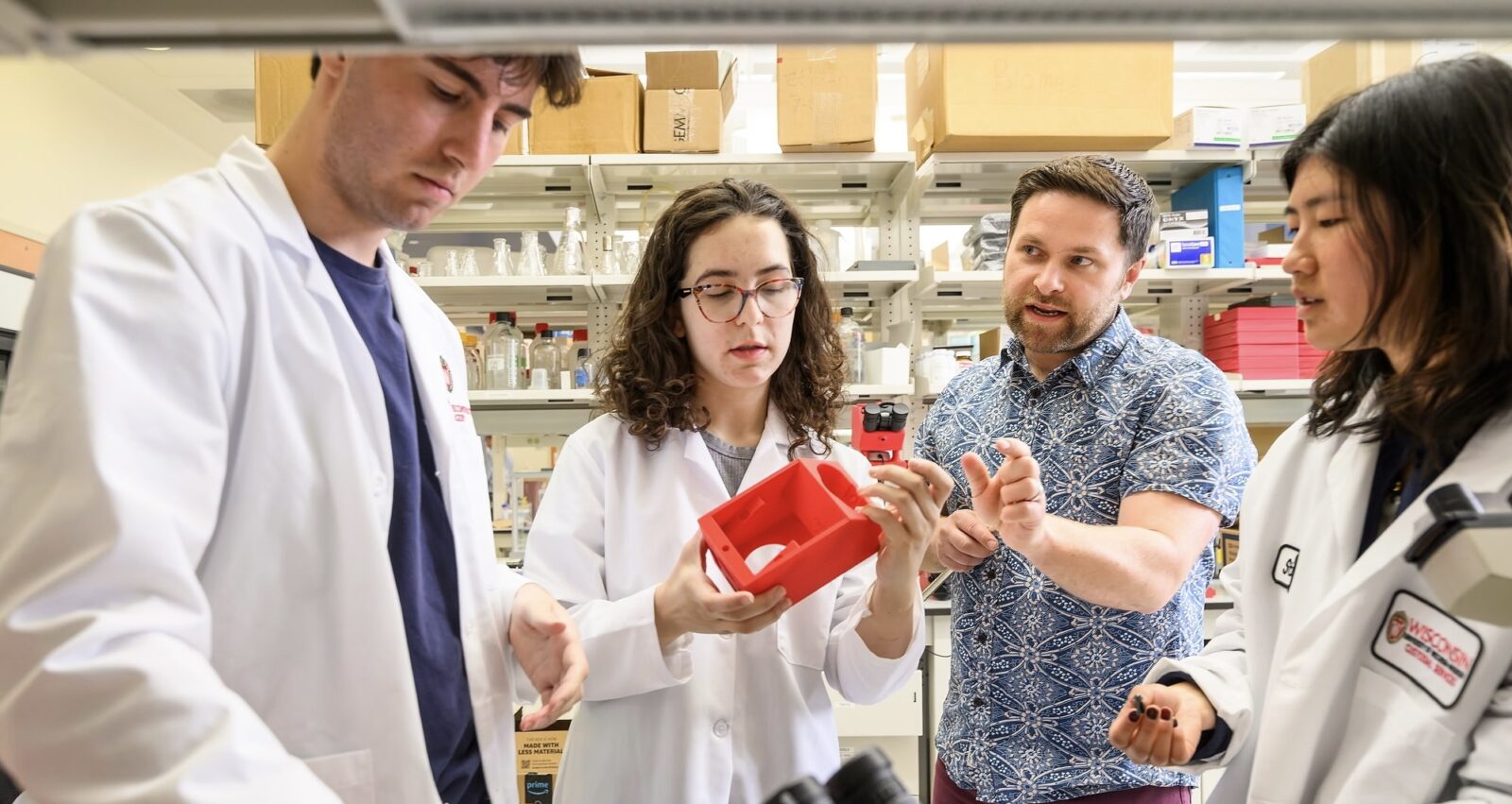
Dingle Lab
Mission Statement
Our mission is to advance our ability to repair, replace, and recover lost limb form and function following complex trauma, with a focus on the peripheral nervous system.
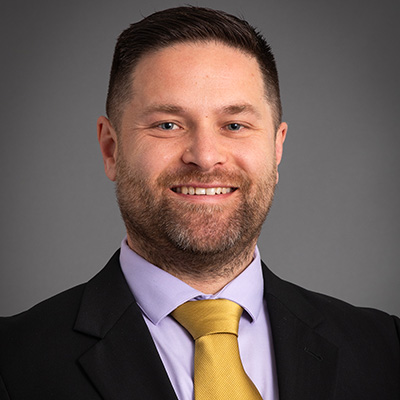
Aaron Dingle Ph.D.
Personal Background
Dr. Dingle received his undergraduate and honors training in biomedical science at Victoria University in Melbourne, Australia, and completed his doctoral training at the University of Melbourne in conjunction with the Bernard O’Brien Institute of Microsurgery and St. Vincent’s Hospital, where his PhD focused on liver vascular tissue engineering. He subsequently completed postdoctoral training in the Department of Surgery at the University of Wisconsin–Madison. He is currently an Assistant Professor in the Department of Surgery, Division of Plastic and Reconstructive Surgery at the University of Wisconsin–Madison. Dr. Dingle specializes in regenerative medicine with a research theme of Repair, Replace, and Recover following complex traumatic injury, focusing on the extremities.
Dr. Dingle leads an active, federally funded translational research program and has secured multi‑million‑dollar support from the Department of Defense (DoD), National Institutes of Health, Defense Advanced Research Projects Agency (DARPA), and the Veterans Administration (VA). His work spans peripheral nerve regeneration, osseointegrated neural interfaces for prosthetic control, bioelectric medicine, vascularized composite allotransplantation, and large‑animal preclinical modeling. In addition, Dr. Dingle plays a central role in microsurgical education at the University of Wisconsin, where he directs curriculum innovation and the development of novel, low‑cost microsurgical simulators, contributes to multi‑institutional microsurgery training initiatives, and leads efforts to expand access to microsurgical education globally. Dr. Dingle is an active member of national and international scientific societies, serves on multiple editorial boards, and is the recipient of numerous honors, including the University of Wisconsin–Madison Chancellor’s Award for Excellence in Research.
What We’re Up To
Our research focuses on ischemia-reperfusion injury (IRI) across a broad range of surgical and transplant applications, from microsurgical free tissue transfer and complex flap reconstruction to coronary artery bypass grafting, solid organ transplantation, and vascularized composite allotransplantation (VCA). Although restoration of blood flow is essential for tissue and graft survival, the sudden reintroduction of oxygen and nutrients can trigger inflammatory and ischemic injury pathways that adversely affect tissue viability, functional recovery, and long-term clinical outcomes.
Our work is highly translational, with the goal of developing and evaluating clinically relevant strategies that mitigate IRI and improve outcomes across reconstructive, cardiovascular, and transplant surgery. By studying interventions that can be readily integrated into surgical practice, organ preservation protocols, and perioperative management, we aim to enhance tissue resilience during ischemia and reperfusion, improve graft and flap survival, and reduce postoperative complications. Ultimately, our research seeks to expand safe preservation and ischemic time limits, improve the success of free flap, coronary bypass, organ transplant, and vascularized composite allotransplantation procedures, and increase access to life-saving and life-enhancing reconstructive and transplant therapies for patients.
Vascularized composite allotransplantation (VCA) research in rat and pig models plays a central role in advancing understanding of immunology, ischemia–reperfusion injury, and limb transplantation. Rat models are particularly valuable for controlled mechanistic studies of immune responses and early graft injury, while pig models provide greater translational relevance due to their anatomical and physiological similarity to humans, enabling evaluation of surgical feasibility, graft perfusion, and functional recovery.
Parallel to these scientific advances, our lab hopes to expand access to standardized surgical training tools, simulations, and shared protocols to help make VCA techniques more accessible and easier to learn, thereby improving consistency and accelerating knowledge transfer across research and clinical communities.